
Indian benchmark indices, Sensex and Nifty, saw declines in early trade, influenced by rising crude oil prices and ongoing geopolitical tensions in West Asia. Experts suggest that crude oil remains a primary concern, with Brent holding near USD 88 a barrel due to renewed US warnings against Iran, embedding a geopolitical risk premium in energy markets. Track Sensex, Nifty

Indian benchmark indices closed marginally higher, with the Sensex gaining over 43 points and the Nifty remaining flat, as a spike in crude oil prices due to geopolitical uncertainties tempered risk appetite.

Indian stock market benchmark indices, Sensex and Nifty, saw significant gains in early trade, driven by a sharp decline in crude oil prices and easing geopolitical tensions, alongside renewed foreign fund inflows.

Indian benchmark indices Sensex and Nifty experienced significant declines in early trade, driven by soaring crude oil prices amidst escalating tensions in West Asia, coupled with weak global market trends and foreign fund outflows.

Analysts predict that the Reserve Bank of India's interest rate decision, the evolving situation in West Asia involving the US-Iran conflict, and crude oil prices will be the primary factors influencing investor sentiment in the Indian stock market this week.

Indian benchmark indices, Sensex and Nifty, saw early gains driven by strong buying in IT stocks like HCL Tech, Tech Mahindra, TCS, and Infosys, alongside a significant boost from HDFC Bank.

Indian companies, including NBFCs, filed proposals with the RBI to raise $6.08 billion through external commercial borrowings (ECBs) and foreign currency convertible bonds (FCCBs) in June, marking a significant increase from the previous month.

Indian benchmark indices Sensex and Nifty recorded their third consecutive day of gains, primarily driven by an over 8 per cent surge in Bajaj Finance following strong Q1 FY27 results, coupled with significant foreign fund inflows and a dip in crude oil prices.

The combined market valuation of four of India's top-10 most valued firms eroded by Rs 87,960.29 crore last week, with Bharti Airtel experiencing the largest decline, amidst a bearish trend in the equities market.

Indian companies, including NBFCs, filed proposals to raise $7.696 billion through external commercial borrowings (ECBs) and foreign currency convertible bonds (FCCBs) in July 2026, a significant increase from $6.09 billion in June.

Indian benchmark indices, Sensex and Nifty, experienced significant declines, with the Sensex falling 493 points and the Nifty dropping for the sixth consecutive day, primarily due to elevated crude oil prices reaching USD 91 per barrel and diminishing hopes for a diplomatic resolution in West Asia.
Indian benchmark equity indices, the Sensex and Nifty, bounced back significantly, with the Sensex climbing 628 points and the Nifty snapping its seven-day losing streak, driven by easing global bond yields and fresh foreign fund inflows.

Indian benchmark equity indices, Sensex and Nifty, extended their winning streak for a third consecutive day, driven by a rally in IT stocks and global cues suggesting a more accommodative monetary policy after softer-than-expected US jobs data.
Indian benchmark equity indices Sensex and Nifty surged in early trade, driven by a sharp correction in crude oil prices below USD 100 per barrel and a rally in global markets, fuelled by improving sentiment surrounding US-Iran negotiations.
Indian benchmark indices Sensex and Nifty experienced declines in early trade, driven by a surge in Brent crude oil prices above USD 91 per barrel due to escalating tensions between Iran and the US, alongside an increase in US 10-year bond yields. Track Sensex, Nifty on August 18.

Indian benchmark indices Sensex and Nifty rallied in early trade, driven by a significant decline in Brent crude oil prices, which fell below the USD 73 per barrel level, and positive trends observed across most Asian equities.

Indian benchmark indices, Sensex and Nifty, saw declines in early trade due to escalating crude oil prices and ongoing US-Iran hostilities, which subdued investor risk appetite.
Indian equity benchmark indices Sensex and Nifty plummeted over 2 per cent following US President Donald Trump's declaration that the interim agreement with Iran is 'over', which led to a sharp rally in crude oil prices and heightened geopolitical tensions.

Newly listed companies Vedanta Aluminium Metal, SBI Funds Management and Manipal Health Enterprises have entered the Rs 1 trillion mcap list since March 2026.

Indian benchmark indices Sensex and Nifty experienced declines due to a sharp rally in crude oil prices, continuous foreign fund outflows, and geopolitical uncertainties. Regulatory developments in the banking sector, particularly the implementation of the Expected Credit Loss (ECL) framework, also contributed to the selling pressure.
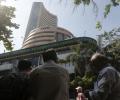
Indian benchmark indices Sensex and Nifty closed largely flat on Monday, recovering from early losses, as escalating tensions in West Asia and a sharp rally in crude oil prices weighed on investor sentiment, despite resilience in IT and consumer durables stocks.

FPIs have already withdrawn Rs 2.6 trillion from Indian equities in 2026, exceeding the outflows recorded in any previous full calendar year.

Indian benchmark indices, Sensex and Nifty, extended their rally for the fourth consecutive day, driven by a significant drop in crude oil prices and strong performance from IT firms, despite mixed global cues.

Indian equity benchmark indices Sensex and Nifty tumbled over 1 per cent for the third consecutive day, driven by a sharp rally in crude oil prices, massive selling in IT stocks, and unabated foreign fund outflows amid ongoing geopolitical tensions in the Middle East.

Non-resident Indians are increasingly investing in luxury homes in India, driven by geopolitical uncertainties, particularly the Iran war. This trend is observed across major cities like Mumbai, Bengaluru, and the National Capital Region, with developers noting a significant rise in NRI pre-sales. While some see it as a temporary shift, others believe India is becoming a stable, long-term investment destination for NRIs, especially those from West Asia.
Indian benchmark indices, Sensex and Nifty, experienced a significant downturn as escalating tensions in West Asia led to a sharp surge in crude oil prices, coupled with fresh foreign fund outflows and a weakening rupee.

'Every period of excessive optimism eventually gives way to a correction, while periods of extreme pessimism often create the best investment opportunities.'

Indian markets on Dalal Street rallied sharply as easing tensions in the US-Iran conflict and stable oil prices boosted sentiment. Track Nifty 50 and BSE Sensex performance and key global triggers.

Indian benchmark indices Sensex and Nifty surged significantly in early trade, mirroring a global rally and a sharp decline in crude oil prices following the finalisation of a peace deal between the US and Iran to end their 107-day conflict and reopen the Strait of Hormuz.

Indian benchmark indices, Sensex and Nifty, experienced declines in early trade due to a surge in crude oil prices and significant selling pressure on bank stocks, impacting overall investor sentiment. Track Sensex, Nifty on July 22.

Inflows into non-resident Indian (NRI) deposit schemes decreased by 23.24 per cent to $2.78 billion during the first quarter of FY27, down from $3.61 billion in the previous year, according to Reserve Bank of India (RBI) data.

Indian equity benchmark indices Sensex and Nifty surged significantly in early trade, mirroring a global market rally and a drop in crude oil prices below USD 100 per barrel, driven by renewed hopes of diplomatic engagement between the US and Iran.

Is the current rally telegraphing a durable peace plan in West Asia, boosted by United States (US) President Donald Trump's incoherent and contradictory posts on social media?

India's current account deficit could widen to 1.7 per cent of GDP, or about $71 billion, if crude oil prices stay above $90 a barrel for a significant part of the second half of FY27.
Indian benchmark indices, Sensex and Nifty, experienced a decline in early trade due to uncertainty surrounding the upcoming US-Iran negotiations in Doha. Foreign fund outflows and a dip in major IT stocks further contributed to the market's cautious sentiment, despite mixed performance in global markets.

Analysts predict that inflation data, the US Federal Reserve's interest rate decision, and crude oil price trends will be the primary factors influencing the movement of Indian stock markets. Geopolitical developments, particularly the US-Iran deal, and foreign investor activity will also play a crucial role.
Indian markets on Dalal Street rallied sharply as easing tensions in the US-Iran conflict and stable oil prices boosted sentiment. Track Nifty 50 and BSE Sensex performance and key global triggers.

Indian benchmark indices Sensex and Nifty surged in early trade, with the Sensex jumping nearly 700 points, primarily driven by strong buying in IT stocks following TCS's positive June-quarter results and optimistic demand outlook. Track Sensex, Nifty on July 10, 2026.
Indian benchmark indices, Sensex and Nifty, opened lower on Tuesday, driven by a surge in global crude oil prices and continued outflows by Foreign Institutional Investors (FIIs), reflecting fragile market sentiment influenced by external factors.
Indian benchmark indices Sensex and Nifty rallied in early trade, driven by a positive trend in global markets, cooling crude oil prices following a US-Iran peace deal, and fresh foreign fund inflows.
